
textAdminOnlyNameForClipboard
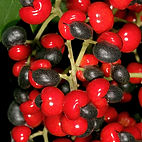
White Pear
Apodytes dimidiata subsp. dimidiata
SA tree no: 422
English: White Pear, Forest White Pear, Small-leaved White Pear, Bird's Eye
Afrikaans: Witpeer, Boswitpeer, Fynblaarswartpeer
Xhosa: Umgqeba, Umdakane, Umkhaza, Umphunzisa
Zulu: Umdagane, Umhlahle, Umemezi, Umkhakhazi, Umkhaza
North Sotho: Sephopha-madi, Kgalagangwê
Siswati: umDzagame
Venda: Tshiphopha-madi
Historical scientific names: Apodytes acutifolia, Apodytes brachystylis, Apodytes capensis, Apodytes grandifolia, Apodytes undulata, Chamaeceras dimidiatus, Mamea africana
Subspecies: Apodytes dimidiata subsp. dimidiata, Apodytes dimidiata subsp. clusiifolia
Apodytes dimidiata subsp. dimidiata, commonly known as the White Pear, is a beautiful and highly variable indigenous evergreen shrub or medium-sized tree from Southern Africa. It is admired for its glossy green leaves, fragrant white flowers, and distinctive black, kidney-shaped fruits with a bright red aril.


Have you got a better picture?
If you don't mind us using it, please upload it by clicking the Upload button below (you must be logged in to do this)
Distinguishing features:
Glossy, dark green, oval to elliptic leaves, often with wavy margins.
Produces abundant clusters of small, sweetly scented, white flowers.
Distinctive kidney-shaped black fruit with a bright red, fleshy aril (a small appendage at the base of the seed).
Smooth, grey to pale brown bark, often with a white, powdery appearance.
Highly variable in size and form, from a scrambling shrub to a tall tree.
Overall appearance:
The White Pear (Apodytes dimidiata subsp. dimidiata) is a highly adaptable plant, ranging from a scrambling shrub in exposed areas to a graceful, medium-sized tree in forests. It typically has a dense, rounded crown of attractive, glossy green leaves, which provide a lovely backdrop for its fragrant white flowers and colourful fruits.
Height:
Typically grows 3 to 10 metres tall, but can range from a 1 metre shrub to a 25 metre forest tree.
Width:
Can spread to a width of 2 to 6 metres, depending on its growth habit.
Leaves:
The leaves are alternate, simple, oval to elliptic, and highly glossy, dark green on the upper surface, paler underneath. They are typically 4-10 cm long and 2-5 cm wide, often with wavy or undulate margins, and a pointed or rounded apex. The venation is usually prominent.
Flowers:
The flowers are small (about 4-5 mm in diameter), five-petalled, star-shaped, and creamy white. They are produced in profuse, branched clusters (panicles or racemes) that emerge from the leaf axils, typically near the ends of branches. They are highly fragrant, emitting a sweet, almond-like scent. Apodytes dimidiata subsp. dimidiata flowers are hermaphroditic (contain both male and female parts) but can be functionally dioecious or polygamo-dioecious, meaning some plants may bear predominantly male or female flowers, or both, leading to some variability in fruit set.
Flowering season:
In South Africa, it generally flowers profusely in spring and early summer (around August to December), often with sporadic flowering at other times.
Fruits:
The fruits are small, flattened, kidney-shaped or heart-shaped drupes, about 4-6 mm long. They are initially green, ripening to a distinctive shiny black or purplish-black. Each fruit has a characteristic bright red, fleshy, cup-shaped aril (a small appendage at the base of the seed) that develops on one side, making them highly attractive.
Seeds:
Each fruit contains a single, kidney-shaped seed that is partially covered by the bright red aril. The seeds are naturally dispersed by birds.
Bark:
The bark on young stems is smooth and pale green. As the plant matures, the bark becomes smooth, thin, grey to pale brown, often with distinctive whitish or pale lichen patches, giving it a somewhat powdery or mottled appearance. Sometimes it can become slightly fissured on older trunks.
Thorns:
None.
Wood:
The wood is very hard, strong, dense, fine-grained, and yellowish-white to pale brown. It is highly prized for furniture, carving, turnery, and musical instruments due to its beautiful finish and durability. Historically, it was also used for wagon parts.
Roots:
It has a well-developed, fibrous root system that provides good anchorage and access to moisture.
Soil type:
Highly adaptable, it thrives in a wide range of well-drained soils, from sandy to loamy or even clay soils, provided drainage is good. It prefers slightly acidic to neutral pH.
Aspect:
Prefers full sun to partial shade. It is moderately drought-tolerant once established but performs best with good rainfall and humidity. It is sensitive to severe frost, especially when young, but mature trees can tolerate light to moderate frost, though leaf damage may occur. It is tolerant of coastal conditions and salt spray.
Edibility:
The fruit itself is not generally considered edible for humans. While birds consume the aril, it is not recommended for human consumption.
Toxicity:
No specific toxicity is widely reported, but it is not commonly consumed, so it's best to err on the side of caution.
Uses:
Primarily cultivated as an ornamental tree in gardens, parks, and large landscapes due to its attractive foliage, fragrant flowers, and colourful fruits. Its hard, durable wood is highly prized for furniture making, carvings, and other fine woodworking. It is also used as a shade tree, screen, or informal hedge. Ecologically, it is a crucial food source for birds.
Ecology:
The small, sweetly scented white flowers attract a wide range of pollinators, including bees, flies, and butterflies. The bright red, aril-covered fruits are a very important food source for numerous frugivorous (fruit-eating) bird species, including turacos (louries), bulbuls, starlings, mousebirds, pigeons, and tinkerbirds, which are crucial for seed dispersal. The dense canopy provides excellent nesting and roosting sites for birds.
Distribution and habitat:
Apodytes dimidiata subsp. dimidiata is indigenous and widespread across a large part of South Africa, including the Western Cape, Eastern Cape, KwaZulu-Natal, Mpumalanga, Limpopo, and Free State provinces, extending further north into other African countries like Eswatini, Zimbabwe, and Mozambique. It is highly adaptable and grows in a wide variety of habitats, including coastal dunes, riverine forests, evergreen forests, forest margins, and even highveld grasslands, often in rocky areas.
Derivation of name:
The genus name Apodytes comes from the Greek "apodyo," meaning "to strip off," possibly referring to the bark that peels off some species, or the way the seed is partially "stripped" by the aril.
The species name dimidiata is Latin for "halved" or "divided into two equal parts," likely referring to the aril that covers only half of the seed.
The subspecies name dimidiata reinforces this.
Common names like "White Pear" refer to the colour of its wood and the pear-like shape of its leaves. "Forest White Pear" refers to its common habitat in forests.
Historical aspects:
The White Pear has a long history of use by indigenous communities in South Africa, particularly for its valuable timber. Its wood was highly prized for its durability and fine grain, used for various implements, carvings, and building purposes. During colonial times, it became one of the most sought-after indigenous timbers, leading to significant exploitation of old-growth forests. Today, it is a protected tree in South Africa, highlighting its ecological importance and the need for its conservation. Its widespread natural distribution also attests to its adaptability and resilience across diverse ecological zones.
Interesting facts:
This tree has a secret party trick with its fruit! They start out plain black, but then a tiny, bright red "lip" or "ear" pops out on one side, making them look like little smiling faces – super cute for the birds that gobble them up!
Its wood is so fine and strong, it's called "White Pear" and was historically used for making fancy furniture, musical instruments, and even wagon parts – it's like the Rolls Royce of South African timber!
Don't tell the bees, but this tree's tiny white flowers smell absolutely divine, like sweet almonds, filling the air with a lovely scent when it's in bloom.
It's a real chameleon of the plant world! You can find it growing as a small, bushy shrub clinging to coastal dunes, or as a towering, majestic tree deep inside a lush forest.
Growing tips:
Propagation: Best grown from fresh seed, which should be cleaned of the aril before sowing. Germination can be slow and erratic. Can also be propagated from cuttings, but this is often difficult.
Planting: Prefers a sunny to partially shaded position. Plant in well-drained soil. It tolerates a range of soil types but benefits from good organic matter.
Watering: Water regularly when young to establish. Once established, it is moderately drought-tolerant but will grow more vigorously with consistent moisture.
Frost Protection: Protect young plants from severe frost. Mature plants can tolerate light to moderate frost.
Pruning: Responds well to pruning to shape it into a shrub or tree form. Can be used for informal hedging.
Uses in garden: Excellent as a specimen tree, screen, informal hedge, or in mixed borders. Its beauty and ecological value make it a top choice for indigenous gardens.
This plant is a fantastic alternative for:

Common name
Scientific Name
Plant type:
Plant type
Plant family:
Plant family (derivation)